Consultancy for Landlords - Get to a 'C' rated EPC!
A one-stop consultancy for landlords where we can take your properties and get them to a C-rated EPC.
We can advise and even install under one price. Advice and services cover:
- Heating
- Insulation
- Air Tightness
- Draft Proofing
- Thermal Imaging
- Ventilation
- EPC Reports
New Protections for Renters - as of January 2026
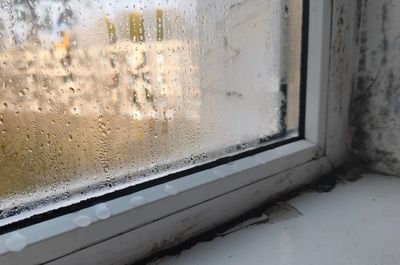
The government has reported that 1.6 million children living in private accommodation currently suffer from cold, damp, or mould.
The government believes that if you rent a home, private or social, a landlord has a responsibility to ensure that it is safe, warm, and affordable.
They are introducing new measures that, by 2030, require private landlords to upgrade their properties to meet minimum energy-efficiency standards.
Infrared removes the risk of Mould & Condensation
Infrared heating helps prevent condensation by addressing the surface temperature, which is the critical factor in condensation formation, rather than primarily heating the air.
Condensation occurs when:
- Moist air contacts a surface whose temperature is at or below the dew point of the air.
- Water vapour then changes to liquid on that surface.
Traditional convective heating raises air temperature first, but cold surfaces can remain below the dew point, allowing condensation to persist.
How infrared prevents condensation
- Directly raises surface temperatures.
- Infrared heaters emit radiant energy that is absorbed by solid surfaces (walls, ceilings, glazing, floors).
- This increases surface temperatures directly.
- When surface temperature is raised above the dew point, condensation cannot form.
Reduces cold-spot temperature differentials
Condensation typically forms at thermal bridges (e.g. corners, window reveals, lintels).
- Infrared heating warms these colder surfaces.
- This reduces temperature gradients and eliminates localised condensation risk.
Improves moisture evaporation balance
By warming surfaces:
- Existing surface moisture evaporates more readily.
- Surfaces dry faster, reducing persistent damp conditions that encourage mould growth.
Stabilises mean radiant temperature (MRT)
Infrared heating increases the mean radiant temperature of the space:
- Occupants feel comfortable at lower air temperatures.
- Lower air temperatures reduce the total moisture-holding capacity of the air being exceeded at surfaces.
Minimises air stratification and cold air wash
Convective systems can drive warm air upward, leaving lower-level surfaces cold.
- Infrared heating does not rely on air movement.
- This reduces cold air wash across external walls that can otherwise promote condensation.
Example
A solid external wall at 12 °C in a room with:
- Air temperature: 20 °C
- Relative humidity: 60%
- Dew point: ~12 °C
Condensation is likely.
If Infrared heating raises the wall surface temperature to 15–16 °C, condensation is prevented even if air temperature and humidity remain unchanged.
Infrared heating does not remove moisture from the air.
- It prevents condensation by warming surfaces.
- Adequate ventilation or moisture control is still essential to manage internal humidity levels.
Infrared heat prevents condensation by:
- Raising surface temperatures above dew point.
- Reducing cold spots and thermal bridging effects.
- Drying surfaces and stabilising radiant conditions.
It is most effective when combined with appropriate ventilation and fabric improvements, particularly in properties prone to surface condensation and mould.
Swap out electric heaters for infrared heaters to reduce your bills and stop condensation mould growth. Perfect for landlords.